Mar 11, 2025
How Quboid Fixed a Retail Loyalty Program That Looked Fine on PowerPoint, But Failed in the Numbers
A multi-brand retail group unified fragmented points into one token, increased redemptions, and drove cross-banner shopping without replacing existing loyalty systems.
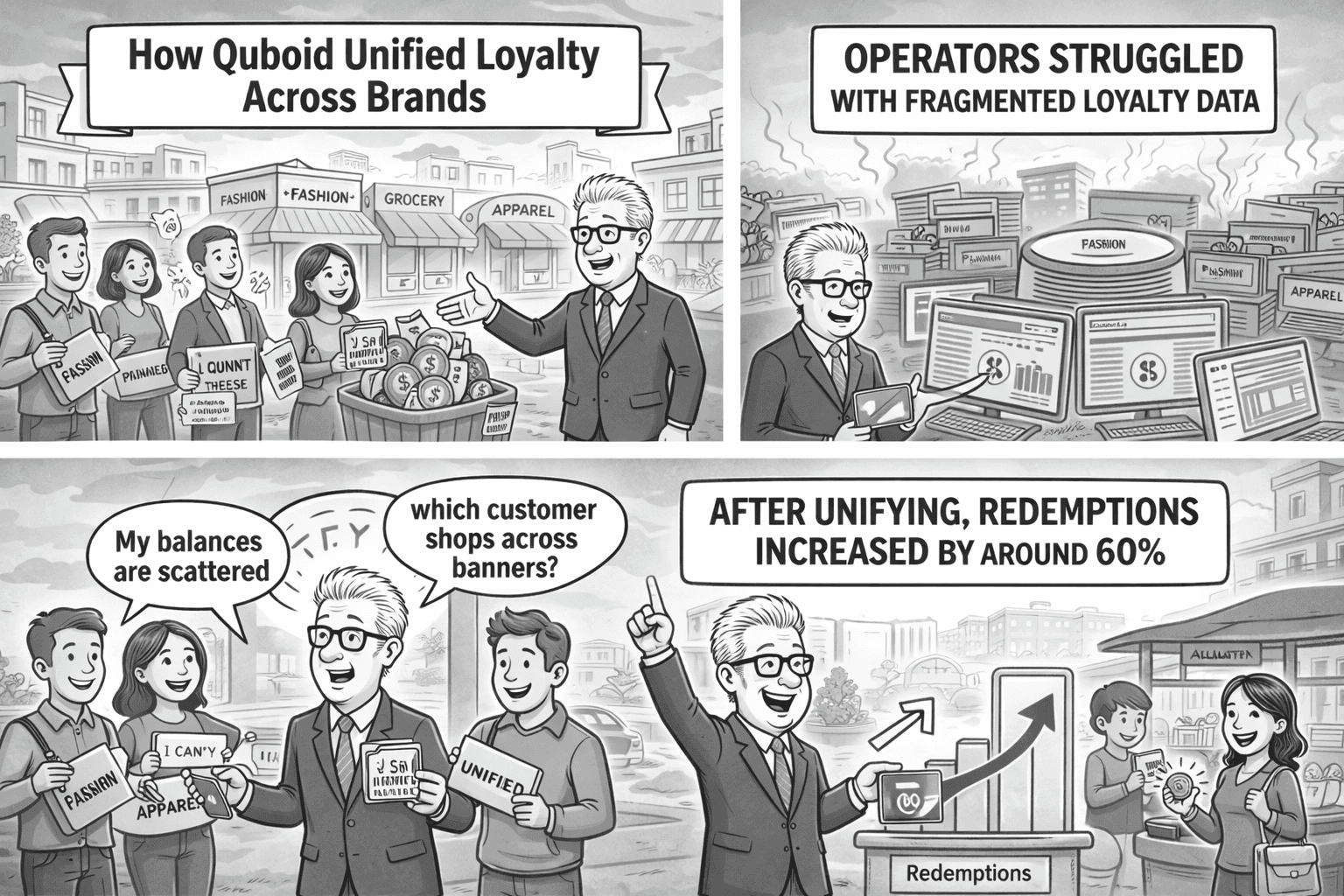
Retail Loyalty that looks strong in decks can still fail in the numbers
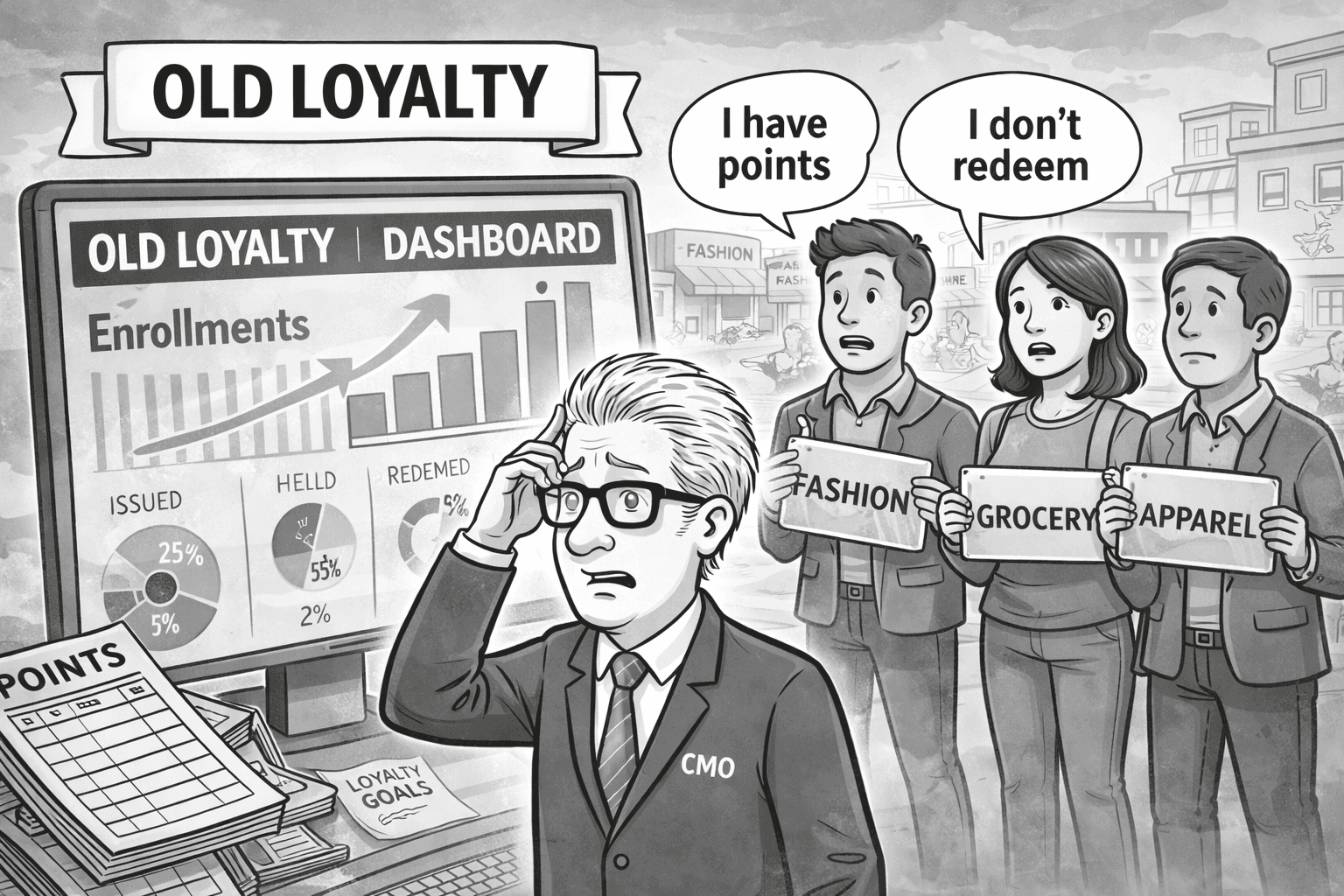
Most retailers already have a loyalty program. The problem shows up after the program goes live: points get issued, enrollments keep growing, and dashboards look “active,” yet the metrics that matter move slowly. Redemption stays weak. Repeat purchase fails to lift meaningfully. Customers stay locked inside one banner even when the group owns multiple brands that should naturally cross-sell into each other.
That was the situation for a multi-brand retail group in India. On paper, loyalty looked fine. In practice, it was structurally set up to underperform.
The starting point: fragmented programs, fragmented value
The group operated multiple banners across categories like fashion, grocery, and apparel. Each banner ran its own points program with its own earn and burn rules, its own tech stack, and its own reporting. Customers enrolled across banners, but the value they earned was split into multiple small balances. Those balances rarely felt meaningful, so points sat idle and redemption stayed low. At the same time, because loyalty data stayed siloed at the banner level, the group had limited visibility into how customers moved across the portfolio. The team could not reliably answer simple operational questions like which rewards drive cross-shopping, where points actually get used, and which segments behave like multi-banner customers.
The business did not want another standalone program or a big-bang relaunch. It wanted the existing programs to behave like one system: one customer view, higher redemption, and a loyalty layer that could drive cross-shopping across the portfolio.
What Quboid implemented: BrandSphere as a growth layer above existing stacks
Quboid deployed BrandSphere on top of the group’s existing loyalty programs rather than replacing them. The goal was to change the mechanics of loyalty without creating a risky migration or forcing major front-end disruption. The implementation focused on three moves: unifying value, expanding utility, and connecting behavior into a single operational view.
1) Unified token layer across banners
Quboid mapped the points issued by each banner into a single Quboid-powered token. Instead of customers holding multiple small balances across memberships, they saw one usable balance. This directly addressed the most common redemption blocker in multi-banner setups: points exist, but they stay too fragmented to feel worth using.
2) Interoperable earning and redemption across the portfolio and partners
Once points were unified, Quboid enabled interoperable earn and burn. Customers could earn in one banner and redeem in another, and the group could extend redemption to select external partners to increase utility. Quboid handled the conversion logic, rule controls, and settlement behind the scenes, which let the group expand the network without operational complexity spilling into each banner’s system.
3) Unified customer and loyalty data
Quboid connected loyalty data across banners into one customer view. This gave the group visibility into cross-brand journeys: where customers earned, where they redeemed, what combinations of banners they moved between, and which offers actually influenced behavior. Loyalty could now be measured and optimized at the group level instead of being trapped in separate banner dashboards.
What changed in the numbers
Within the first few months of going live, the shifts were measurable.
Redemptions increased by around 60% after the unified token was introduced, largely because customers now held a meaningful balance and had more places where value could be used.
Cross-banner shopping increased as customers who previously bought within a single banner began redeeming and purchasing across multiple banners and partner locations, driving incremental footfall and improving internal capture across the portfolio.
Customer lifetime value climbed over time as loyalty shifted from being an “earn someday” promise into something customers could repeatedly use across their real shopping patterns.
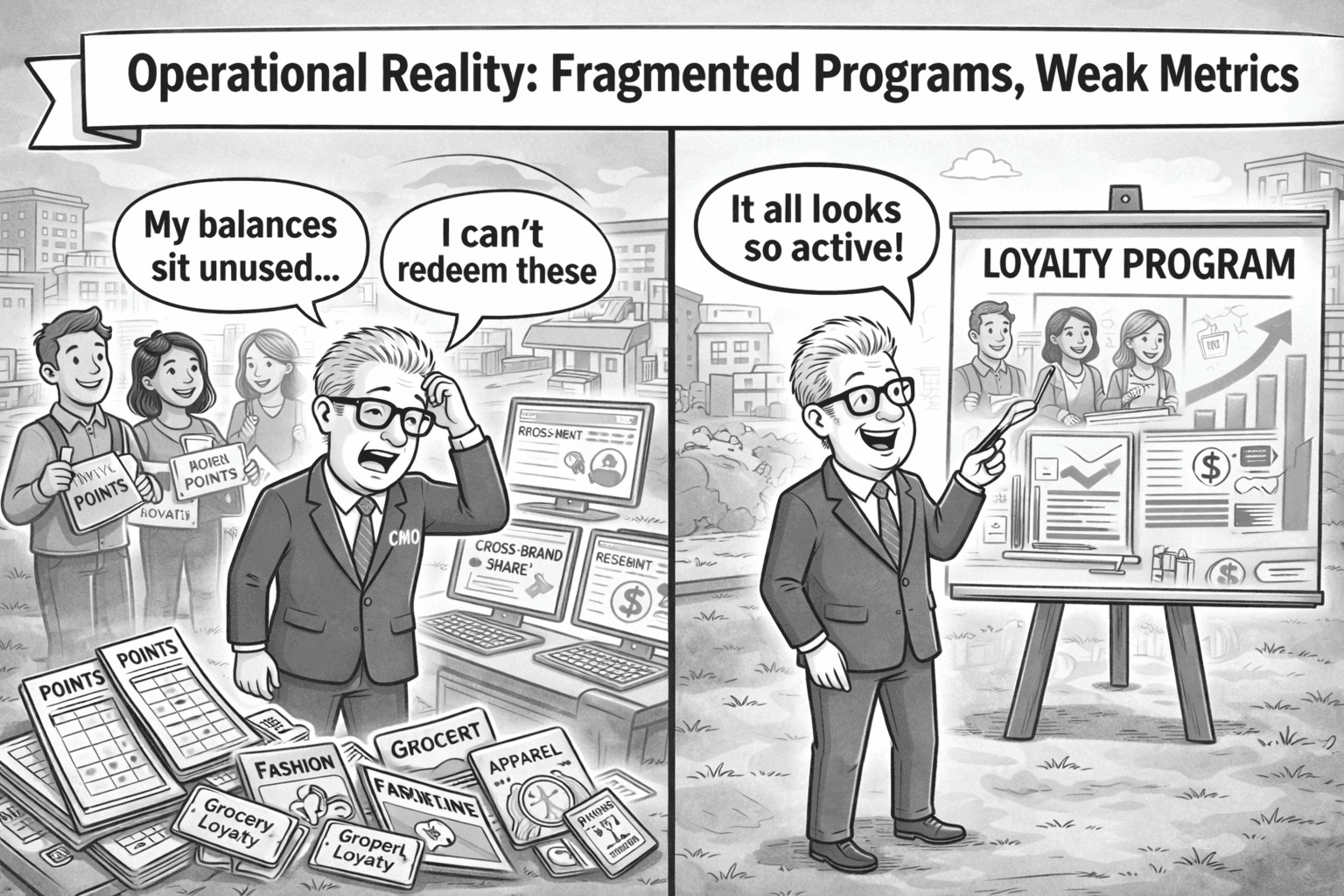
Retail loyalty underperforms when value stays locked inside silos. Customers do not redeem when points feel small, scattered, and limited to one brand. Operators struggle when loyalty success is tracked through enrollment and issuance instead of redemption and cross-shopping.
Quboid fixed the mechanics by unifying balances, expanding where value could be used, and giving the group a single customer view to measure loyalty as a portfolio growth lever. The result was a loyalty system that stayed compatible with existing stacks while finally behaving like one program in the numbers.