Mar 11, 2025
How a Digital-First Fashion Retailer Used Quboid to Build Coalition-Grade Loyalty
A digital-first fashion retailer wanted the loyalty upside of a coalition program without building a coalition from scratch. It already had strong engagement and an in-house points currency, but the rewards only worked inside its own storefront. Quboid connected the program into a broader partner network while keeping the brand’s UX and economics intact.
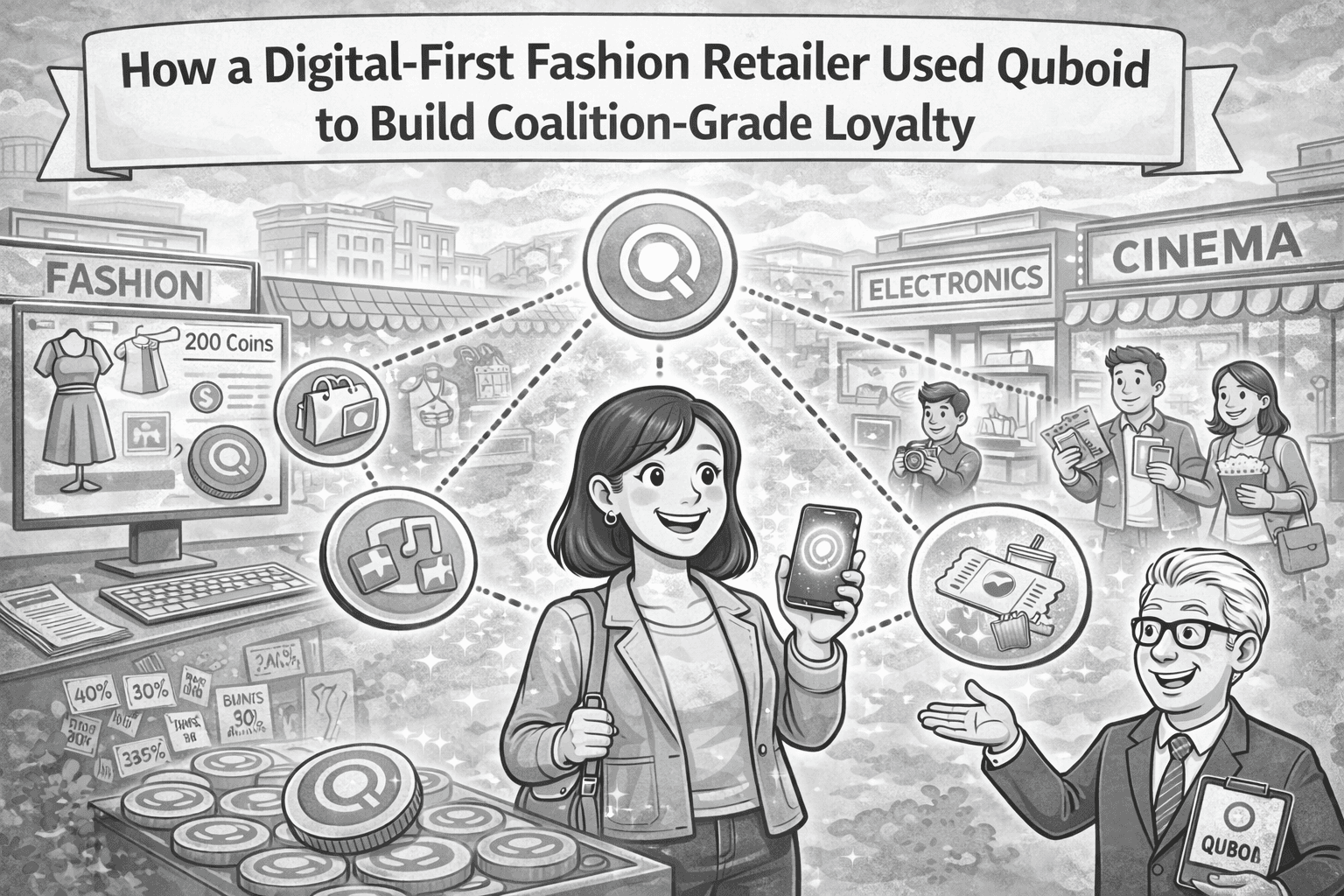
The starting point
Growth was healthy, then started to flatten as the loyalty loop hit a ceiling.
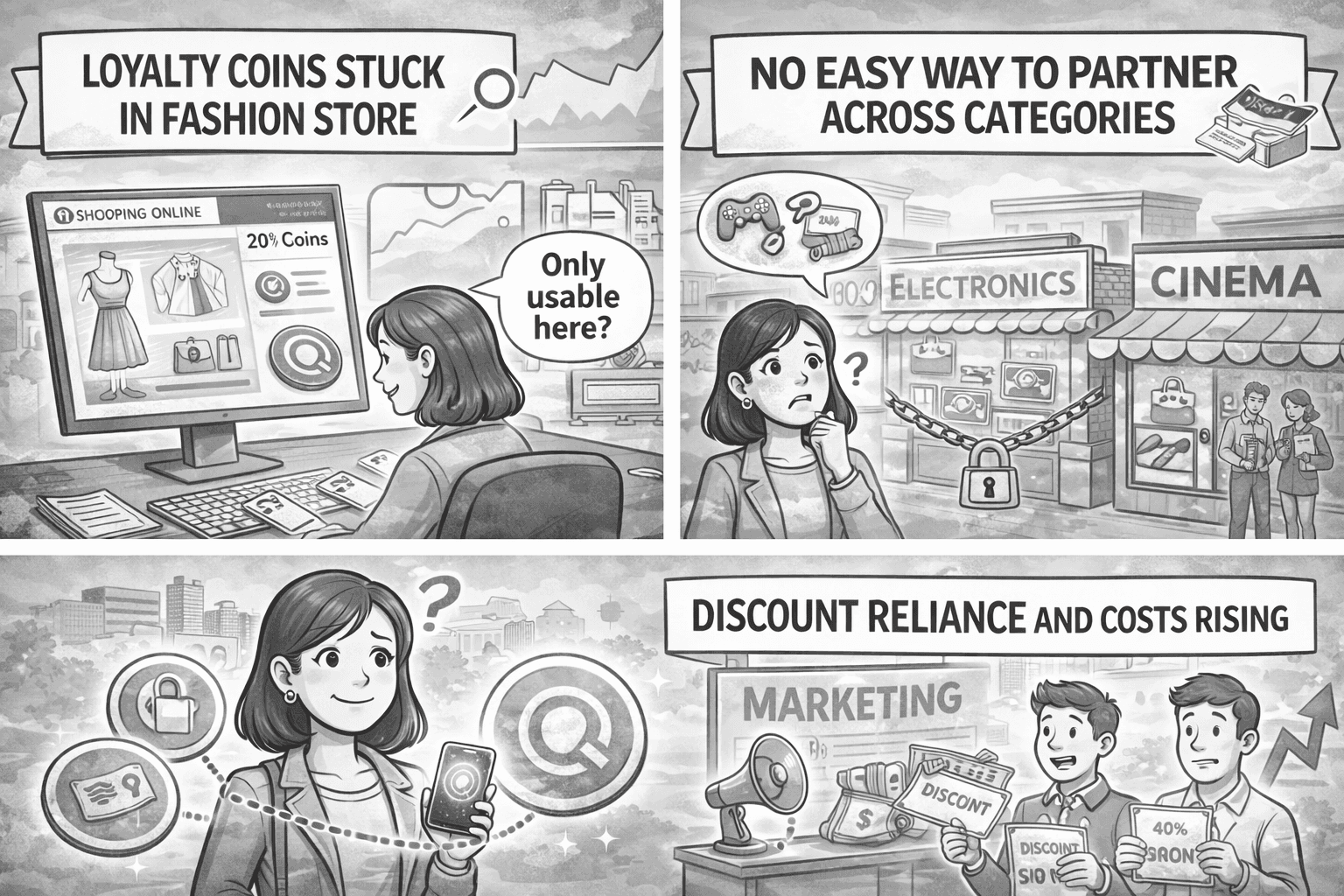
What broke operationally
Rewards felt “small” because coins only had value on one site, so customers saved less, redeemed less, and needed stronger nudges to return.
Partnerships stayed theoretical because every cross-brand deal meant custom negotiation, custom integrations, and long lead times.
Retention leaned heavily on discounts and performance media, pushing acquisition and re-engagement costs up as cohorts matured.
The retailer wanted to:
Preserve the brand experience end-to-end.
Expand reward utility into new categories.
Unlock partner growth without building heavy plumbing each time.
What Quboid implemented
Quboid plugged the retailer into its tokenized loyalty network and gave the marketing team self-serve controls to ship cross-brand journeys.
A. Token mapping
The retailer’s existing loyalty coins were mapped into Quboid’s interoperable token format.
Value parity stayed consistent for customers.
Utility expanded beyond the fashion storefront into partner redemption.
B. Partner network activation
The retailer connected with complementary brands like an electronics store and a cinema chain through Quboid’s network layer.
Faster partner onboarding.
Fewer one-off technical builds.
Cleaner repeatability for future partners.
C. Studio campaign workflows
Using Quboid Studio, the team launched cross-brand campaigns such as:
“Earn on fashion, redeem on entertainment”
“Bonus earn when you complete a multi-brand journey”
“Category unlocks for high-value cohorts”
One configuration propagated across web, app, and owned channels, while Quboid handled token logic, routing, and settlement in the background.
What customers experienced
Customer messaging stayed simple and familiar:
“Your fashion rewards now work for gadgets and movie tickets.”
The experience stayed brand-native, while the reward value suddenly felt bigger because it traveled across categories.
What changed in the numbers
After launch, both engagement behavior and acquisition mix shifted.
Results observed
Redemptions: roughly 4× increase after partner redemptions went live as customers tested new categories.
New customers: partner-driven referrals contributed about 20% of new customer acquisitions over six months.
Efficiency: partner-sourced customers arrived at lower cost and higher intent than typical paid channels, improving blended CAC.
Net effect: coalition-style outcomes without coalition-style operational burden.
This outcome shows up consistently when digital-first retailers add multi-category utility without breaking their existing program.

Why it works
Control stays with the brand: UX and unit economics remain first-party while reward utility expands through the network.
Execution stays with marketing: Studio turns cross-brand journeys into configurable campaigns, not custom projects.
Infrastructure stays invisible: Quboid’s network rails and settlement layer handle value exchange so teams stay focused on offers, cohorts, and positioning.
For digital-first retailers, coalition-grade loyalty becomes an execution play:
Connect to Quboid, activate partners, configure the rules once, and scale reward utility across categories to lift redemption, improve retention efficiency, and unlock partner acquisition.